How to Use Every Inch of Space Inside Your Garage Cabinets Efficiently
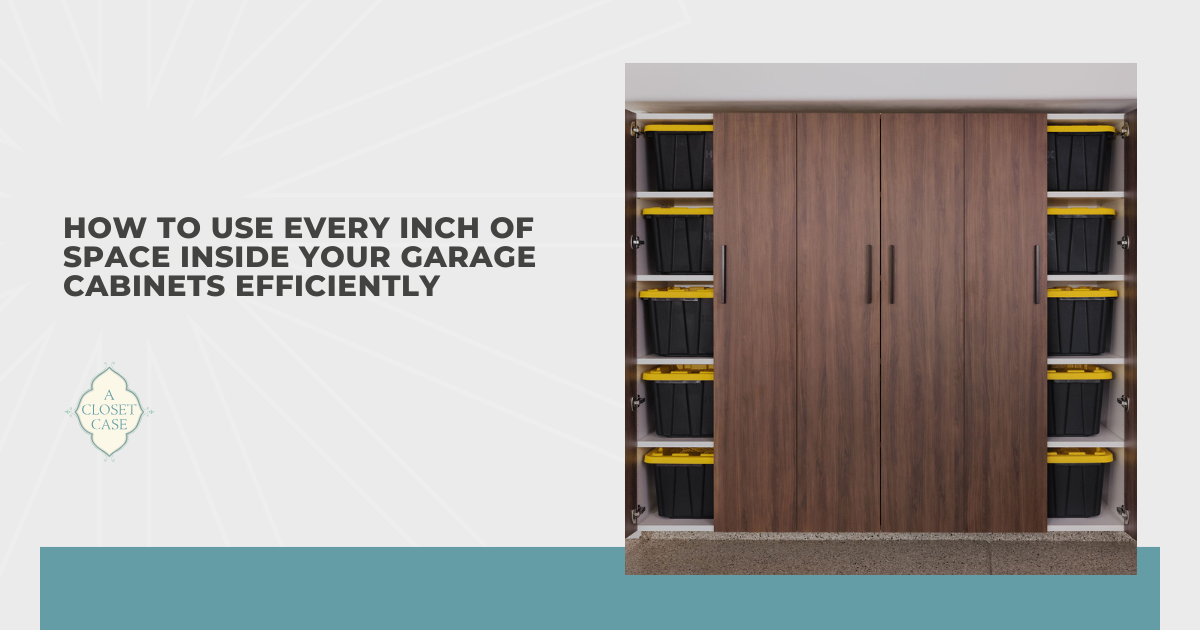
You open the cabinet door, something falls out, you shove it back in, and you close it before anything else escapes. Sound familiar? Most people treat their garage cabinets like a black hole where things go in but rarely come back out in any organized fashion. What surprises me most is how little it actually takes to fix that. The cabinets themselves aren't the problem, and in most cases, neither is the amount of stuff you have.
Your garage cabinets are only as useful as the system behind them. Right now, they might be storing things, but there's a good chance they're not actually organizing them. Those are two very different things, and closing that gap doesn't require new cabinets or a complete overhaul of your garage. The difference almost always comes down to a few intentional decisions about how the space inside gets used.
Before diving into the strategies, here's what we'll be covering to help you get the most out of your garage cabinets:
- Take stock of what you're actually storing
- Use vertical space inside the cabinet
- Group items by category and frequency of use
- Use the right containers and bins
- Store tall and bulky items strategically
- Keep the system maintained
Each of these strategies builds on the next, so it's worth reading through all of them before making any changes to your garage cabinets.
Take Stock of What You're Actually Storing
Before anything gets moved, reorganized, or thrown out, it helps to know exactly what's living inside your garage cabinets right now. Most people are genuinely surprised by what they find when they pull everything out and lay it all on the floor. Duplicate tools, expired products, and items that haven't been touched in years all have a way of quietly consuming space that could be working harder. More often than not, it becomes obvious why the cabinets never seem to have enough room.
Once you know what you're working with, sorting by category becomes much more straightforward. Tools go with tools, automotive supplies go with automotive supplies, and anything that doesn't belong in the garage gets dealt with separately. Most people are surprised by how much space opens up once the unnecessary items are gone.
Knowing what you have also helps you make better decisions about how the cabinet space gets divided. Items you reach for daily shouldn't share the same shelf as things you only pull out once or twice a year. Clear separation between what's needed daily and what isn't is what makes every other strategy easier to implement. Without it, even the most organized cabinet layout tends to fall apart within a few weeks.
Use Vertical Space Inside the Cabinet
Most garage cabinets come with one or two fixed shelves, and most people never question whether that's actually the best use of the space. A standard shelf configuration leaves a significant gap between the top of stored items and the shelf above them. Across multiple cabinets, that wasted airspace adds up to a surprising amount of usable storage. Adjustable shelving allows the height between shelves to match what's actually being stored rather than forcing items to conform to a fixed layout.
Shelf risers and stackable organizers are worth adding in sections where adjustable shelving isn't an option. A riser placed on an existing shelf effectively creates a second level of storage within the same footprint, which is particularly useful for canned goods, spray bottles, and smaller tools. Stacking bins and containers take advantage of vertical space without requiring any modifications to the cabinet itself. Used together, these solutions can double the storage capacity of a shelf that previously held a single disorganized layer of items.
Overhead space inside taller cabinets is another area that rarely gets used to its full potential. Items stored on the highest shelf are often out of sight and out of mind, which is exactly why rarely used items belong there. In my experience, the most efficient garage cabinets reserve upper shelf space for seasonal items, backup supplies, and anything that only comes out a few times a year. Frequently used items kept at eye level and within easy reach is what makes the cabinet genuinely easy to use on a daily basis.
Group Items by Category and Frequency of Use
If you've ever opened a garage cabinet and spent two minutes looking for something you use every week, the problem is almost certainly a lack of category organization. Grouping like items together, tools with tools, cleaning supplies with cleaning supplies, and automotive products with automotive products, makes the cabinet intuitive to navigate without having to think about it. A cabinet organized by category is one that stays organized with far less effort on your part.
Frequency of use should drive your decisions about where each category lives within the cabinet. Items you grab daily or weekly belong at eye level and within easy reach, while things you pull out a few times a year can live on higher shelves or further back. Bulky or rarely used items stored in prime cabinet real estate are one of the most common reasons garage cabinets feel frustrating to use despite having enough space. Rethinking placement based on how often you reach for something can make an immediate difference in how the cabinet functions for you.
Mixing high-frequency and low-frequency items on the same shelf creates unnecessary friction every time you open the cabinet. Dedicating specific shelves or sections to each frequency tier keeps the most accessible spots reserved for what you use most. Sports gear used every weekend belongs at eye level, while seasonal decorations can afford to live higher up. Placement decisions made with frequency in mind are what separate a cabinet that works for you from one that just stores things.
Use the Right Containers and Bins
The containers you use inside your garage cabinets have a bigger impact on how much space you get out of them than most people realize. Mismatched bins, oversized boxes, and random containers that don't fit the shelf properly all create wasted space around and between them. In my experience, switching to properly sized, stackable containers is one of the most effective changes you can make without touching the shelves themselves. Clear containers are worth prioritizing wherever possible, as seeing what's inside without opening anything saves time and frustration.
Stackable bins are particularly useful in cabinets where vertical space between shelves isn't being fully utilized. Uniform containers that fit the shelf dimensions properly eliminate the awkward gaps that mismatched storage creates. Labeling each container clearly means anyone in the household can find what they're looking for and put it back without asking. Consistency in container size and style across the cabinet makes the whole system easier to maintain.
Clear containers work especially well for hardware, small tools, and accessories that are easy to lose track of on an open shelf. Shallow bins work better for items that need to be visible at a glance, while deeper containers suit bulkier items that don't need frequent access. Grouping similar items together in a single labeled bin keeps them contained and easy to grab as a unit. Matching the container to what's going inside it is what makes the difference between a cabinet that feels organized and one that just looks like it is.
Store Tall and Bulky Items Strategically
Tall and bulky items are the ones that tend to throw off an otherwise organized garage cabinet. Long-handled tools, hoses, extension cords, and bulk supply containers don't fit neatly on a standard shelf, so they end up wherever there's room rather than where they actually make sense. Without a plan for these items, they take up more space than they need to and make everything around them harder to access. Thinking through where they belong before organizing the rest of the cabinet saves a lot of backtracking later.
Dedicating a specific section of the cabinet to tall and oversized items keeps them from disrupting the rest of the layout. A full-height section with the shelf removed or raised gives long-handled tools and tall containers a place to stand upright without being crammed in at an angle. Hooks mounted inside the cabinet work well for coiled hoses and extension cords, keeping them contained and tangle-free. Bulk supplies like large bottles or bags of product store more efficiently when they're grouped together in a designated lower cabinet section where the extra weight is better supported.
Keeping bulky items consolidated in one area of the garage cabinets also makes the rest of the space easier to organize around them. Knowing exactly where oversized items live means you're not constantly shuffling things around to get to what you actually need. A little upfront planning for awkward items pays off every time you open the cabinet.
Keep the System Maintained
An organized garage cabinet doesn't stay that way on its own. Items get put back in the wrong place, new things get added without a designated home, and before long the cabinet that worked so well starts feeling just as frustrating as it did before. A little ongoing maintenance is what keeps the system functioning the way it was designed to. Without it, even the most thoughtfully organized cabinet will revert to chaos faster than you'd expect.
Scheduling a quick monthly check of your garage cabinets takes less time than most people think. I've found that spending 15 to 20 minutes going through each cabinet once a month catches small problems before they turn into bigger ones. Putting things back where they belong, removing items that don't have a home, and adjusting anything that isn't working is all it takes.
A more thorough seasonal review is worth doing at least twice a year, separate from the monthly check. Use it as an opportunity to reassess whether the layout still makes sense for how the garage is being used. Items that were grabbed daily six months ago may have become seasonal, and the cabinet layout should reflect that shift. Small adjustments made during a seasonal review are far less disruptive than a complete reorganization every few years.
Conclusion
None of these strategies require you to buy new cabinets, find a bigger garage, or dedicate an entire weekend to the project. Taking stock of what you're storing, using vertical space deliberately, grouping items by category and frequency, choosing the right containers, planning for bulky items, and keeping the system maintained all work together to make a real difference in how your garage functions. Most of them can be implemented gradually without disrupting your entire garage at once. A garage cabinet that's been set up with intention is one that keeps working for you long after the initial effort is done.
Showroom Location
260-D Seven Farms Drive, Daniel Island, SC 29492
Contact Information
Phone: (843) 971-9069
Email: aclosetcase@gmail.com
Hours
Showroom & Office Hours
Monday - Friday: 9:00 AM - 5:00 PM
Saturday - Sunday: By Appointment Only