What to Look for When Buying a Garage Workbench for the First Time
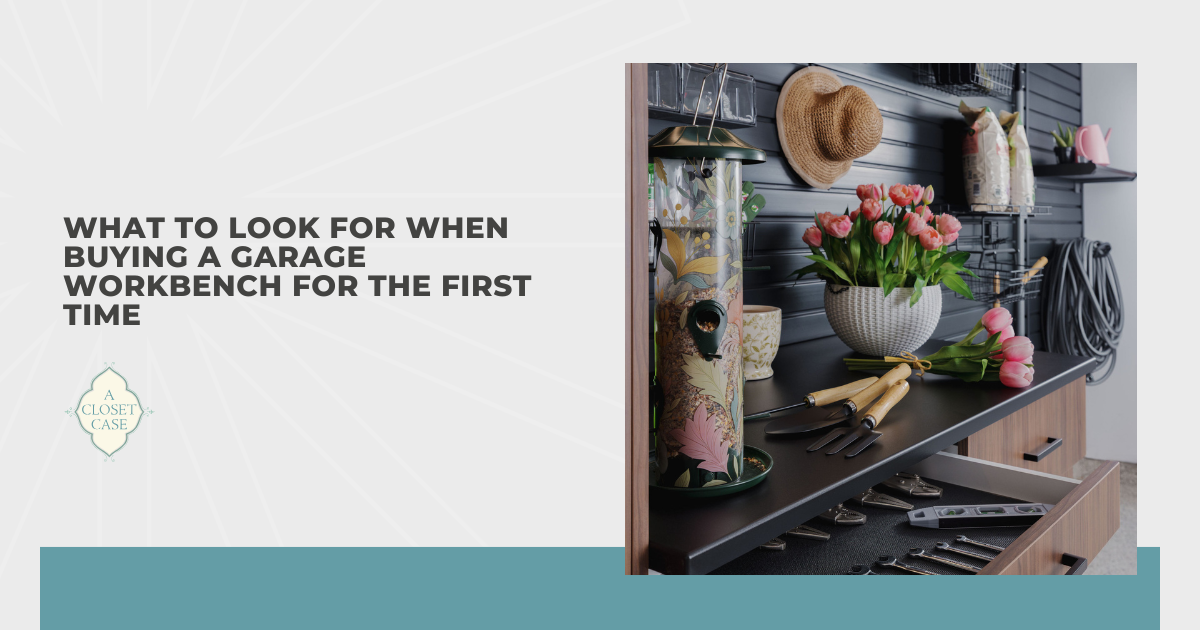
You've decided you need a garage workbench, and now you're realizing the decision is a lot more complicated than you expected. Wood or steel? Fixed or mobile? How deep, how wide, how tall? With or without storage? The questions pile up quickly, and without a clear framework for thinking through them, it's easy to end up with something that looks great in the showroom but doesn't actually work for the way you use your garage. I've seen this happen more times than you'd think, and it almost always comes down to the same few oversights.
Most first-time buyers focus on price and size, and while both matter, they're only part of the picture. The work surface material, weight capacity, storage options, and build quality all play an equally important role in determining whether a workbench actually delivers on what you need it to do. Garage cabinets and integrated storage are also worth factoring in from the start, as the most functional workbench setups treat storage as a core feature rather than an add-on.
Here's everything you need to consider before buying your first garage workbench and setting up the storage around it:
- Intended use
- Size and dimensions
- Work surface material
- Weight capacity
- Storage options
- Mobility vs. fixed installation
- Build quality and materials
- Budget considerations
Keep reading to find out what each of these considerations means in practice and why skipping any of them is where most first-time buyers go wrong.
Intended Use
Before you look at a single spec sheet or price tag, get clear on what you actually plan to do at the workbench. A hobbyist who builds furniture on weekends has completely different needs than someone who works on car engines or uses the space for crafting and home repairs. The type of work you'll be doing determines everything from the surface material to the height and depth of the bench. Getting this wrong is the most common reason first-time buyers end up with a workbench that never quite feels right.
Heavy-duty automotive work demands a steel surface that can handle impact, heat, and chemical exposure. Woodworking calls for a solid wood surface with dog holes, a sturdy vise, and enough depth to support large pieces comfortably. Crafting and general DIY work are more forgiving, but still benefit from a surface that's easy to clean and resistant to scratches. Knowing which category your work falls into before you shop narrows the field and makes every other decision easier.
If your work spans more than one category, prioritize the use case that's most demanding. In my experience, trying to find a workbench that does everything equally well almost always leads to one that does nothing particularly well. A workbench optimized for your primary use will serve you far better than a compromise.
Size and Dimensions
The size of your workbench starts with the space you have available, so measure the garage before you look at anything else. A workbench that's too large crowds the garage and makes it harder to move around, while one that's too small limits what you can actually do on it. Standard workbenches range from about 48 to 96 inches in length, but the right size depends on your layout, what else shares the space, and how much room you need to work comfortably. Measure twice before you commit, because a workbench that doesn't fit the space is a problem you'll deal with every single day.
Height is another dimension that most first-time buyers don't think carefully enough about. A workbench set at the wrong height causes unnecessary strain on your back, shoulders, and wrists over time, especially during longer sessions. The standard workbench height sits between 34 and 36 inches, but the right height for you depends on your own stature and the type of work you'll be doing. Heavier work like automotive repairs generally benefits from a lower surface, while detailed or precision work is easier at a slightly higher one.
Depth is the third dimension worth thinking through before you buy. Most workbenches range from 24 to 36 inches deep, and the right depth depends on the size of the projects you'll be working on. A shallower bench works well for smaller projects and tighter spaces, while a deeper surface gives you more room to spread out on larger builds. The wrong depth is easy to overlook in a showroom but becomes obvious the moment you try to work on something that doesn't quite fit.
Work Surface Material
The surface of your workbench takes the most abuse of any part of the setup, so it's worth understanding what each material means for the kind of work you'll be doing. Here's a breakdown of the most common workbench surface materials:
- Wood: Butcher block is the go-to choice for woodworking and general DIY work, offering a durable surface that holds up well under daily use. Easy to sand and refinish when it shows wear, it's a long-lasting option worth considering.
- Steel: Stainless steel surfaces are built for heavy-duty and automotive work, handling impact, heat, and chemical exposure without showing wear. Rust-proof and easy to clean, they're one of the most durable workbench surface options available.
- Laminate: Available in melamine and resin-coated variations, laminate surfaces are easy to clean and well-suited for crafting and light DIY work. If your work involves heat, heavy impact, or chemicals, laminate isn't the right surface for you.
When in doubt, think about what you'll be doing at the bench most often and let that drive the decision.
Weight Capacity
Load ratings are a critical spec on any workbench, and among the easiest to overlook when you're focused on size and surface material. Most workbenches list a maximum surface weight capacity, but that number alone doesn't tell the full story. The frame's structural integrity, the quality of the joinery, and how the bench is anchored all factor into how much weight it can safely handle. A workbench that flexes or creaks under a loaded toolbox is a safety concern you don't want to discover after the fact.
For heavy-duty work involving large power tools or engine blocks, you'll want a surface capacity of at least 1,000 lbs and a frame built from heavy-gauge steel or solid hardwood. Lighter work like crafting or small repairs can be done comfortably on a bench rated for 500 lbs or less. Pay attention to the shelf and drawer weight ratings too, since those are separate from the surface capacity. A workbench that holds the weight on top but buckles under the storage below isn't doing its job.
Ask the retailer or manufacturer for the exact load ratings before you commit. Capacity specs aren't always prominently displayed, and some manufacturers list numbers that don't reflect real-world performance. A workbench rated for the work you actually do is one you'll feel confident using without second-guessing it.
Storage Options
In my experience, the workbenches that get used most consistently are the ones where storage was thought through just as carefully as the surface itself. Here's a look at the storage options worth considering when choosing your workbench:
- Drawers: Full-extension drawers with soft-close slides keep smaller tools, hardware, and accessories organized and within easy reach without taking up surface space.
- Lower cabinet sections: Enclosed cabinet space beneath the workbench is ideal for power tools, larger equipment, and bulk supplies that don't need to be accessed constantly.
- Open shelving: Side or back shelving works well for items you reach for regularly and want visible at a glance without having to open a drawer or cabinet.
- Slatwall systems: Customizable with hooks, baskets, and other accessories, slatwall panels turn the wall space above your workbench into a neat and accessible storage solution for tools and supplies.
- Locking storage: Worth prioritizing if you share the garage with others or have young children who might access the space unsupervised.
The right storage setup means everything you need is where you need it, every time you need it.
Mobility vs. Fixed Installation
The decision between a mobile and a fixed workbench comes down to how you use your garage. A fixed workbench is bolted to the wall or floor, making it more stable and better suited for heavy-duty work. Mobile workbenches sit on locking casters that let you reposition the bench as needed. If your garage doubles as a parking space or hobby area, the ability to move the workbench out of the way is a genuine advantage.
Fixed workbenches are the better choice when stability is a priority. Bolting the bench to the wall eliminates any flex or movement, which is critical when you're using power tools, applying heavy clamps, or working with materials that require consistent downward pressure. Heavier workbench models, particularly those made from solid hardwood or heavy-gauge steel, are also difficult to move safely once they're loaded with tools and equipment.
Mobile workbenches work best in garages where the layout changes frequently or where the work moves around rather than staying in one spot. Casters rated for the full loaded weight of the bench are worth paying attention to, as undersized wheels struggle on concrete and wear out quickly under heavy use. A mobile bench that wobbles or rolls unexpectedly mid-project is more of a hazard than a convenience, so locking casters with a solid engagement mechanism are non-negotiable.
A dedicated workshop benefits from a permanent installation, while a multi-purpose garage is better served by a mobile bench. If you're unsure, a hybrid setup where the primary bench is fixed and a smaller secondary bench on casters handles overflow work is worth considering. Stability where it matters most without sacrificing flexibility is what makes the hybrid approach appealing for a lot of homeowners. The right choice becomes clear once you're honest about how the garage actually gets used.
Build Quality and Materials
A workbench can look solid in a showroom and fall apart within a year if the construction behind it doesn't hold up to real use. Frame construction is the first thing worth evaluating, as it determines how well the bench handles daily stress over time. Welded steel frames are generally more durable than bolted ones, as welded joints don't loosen under repeated impact and vibration. Solid hardwood frames offer comparable strength for woodworking applications but need to be kept away from prolonged moisture exposure.
Joinery quality is another area that separates a well-built workbench from one that's been designed to look good at a price point. Dovetail joints, mortise and tenon connections, and reinforced corner brackets all indicate a level of craftsmanship that bolted connections don't match. Pay attention to how the work surface attaches to the frame, as a surface that's simply screwed down is far more likely to shift or warp over time. Drawer slides, hinge quality, and cabinet door construction are also worth inspecting closely before you commit.
Hardware is the detail most buyers overlook until something breaks. In my view, the quality of the drawer slides, hinges, and locking mechanisms tells you more about overall build quality than almost anything else. Cheap hardware loosens, sticks, and fails faster than the bench itself. Full-extension ball-bearing drawer slides and heavy-duty hinges are signs that the manufacturer was thinking about long-term performance rather than just hitting a price point
Budget Considerations
Setting a realistic budget before you start shopping keeps you from getting talked into something that's either more than you need or not enough to do the job. Garage workbenches range from under $200 for basic flat-pack options to well over $2,000 for heavy-duty professional setups. The price difference almost always reflects a real difference in materials, construction, and longevity. A $300 bench and a $1,500 bench are not the same product with a different price tag.
Long-term value is a more useful lens than upfront cost when evaluating your options. A well-built bench that lasts 20 years at $1,200 costs significantly less over time than a $400 bench that needs replacing every few years. Factor in the cost of the tools and supplies you'll store on it, because a bench that fails under a full tool setup is an expensive problem. Warranties are also worth comparing, as a solid guarantee signals that the manufacturer stands behind what they've built.
Avoid making price the primary decision driver. Mid-range workbenches in the $500 to $1,000 range tend to offer the best balance of quality and affordability for most homeowners. Spending a little more upfront for solid construction and quality hardware almost always pays off over time.
Conclusion
A garage workbench is one of those purchases that rewards the buyers who take the time to think it through before committing. The right surface material, load capacity, storage setup, and build quality all work together to determine whether the bench you bring home actually fits the way you work. Rushing the decision based on price alone is the most common reason first-time buyers end up starting over sooner than they expected. A workbench chosen with intention is one you'll still be happy with years down the road.
Showroom Location
260-D Seven Farms Drive, Daniel Island, SC 29492
Contact Information
Phone: (843) 971-9069
Email: aclosetcase@gmail.com
Hours
Showroom & Office Hours
Monday - Friday: 9:00 AM - 5:00 PM
Saturday - Sunday: By Appointment Only