How to Organize Kids' Closets for School Mornings
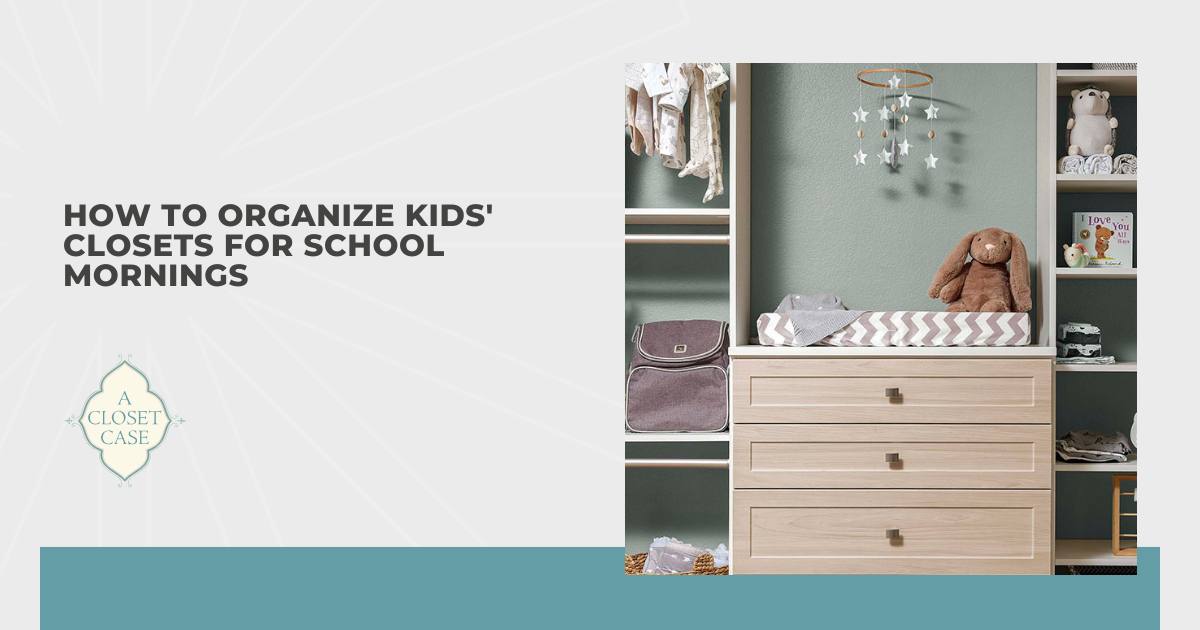
School mornings have a way of exposing every flaw in kids' closets. Missing shoes, wrinkled uniforms, and crowded rods somehow show up right when you’re watching the clock. A cluttered space slows everyone down and turns simple decisions into unnecessary stress. In my experience, once kids' closets are organized with real mornings in mind, getting out the door becomes noticeably smoother.
To make school mornings easier, the closet has to support speed, visibility, and independence. Here’s how to organize kids' closets so the routine feels smoother from the start of the day:
- Remove morning friction first
- Create a dedicated school-ready zone
- Make everything kid-height and reachable
- Simplify daily outfit selection
- Contain shoes, accessories, and small items
- Build a simple evening reset habit
- Adjust the system as kids grow
Keep reading as we walk through each step and how it supports calmer, more efficient mornings.
Remove Morning Friction First
School mornings don’t leave much margin for extra decisions. If kids' closets are packed with too many options, choosing an outfit can quickly turn into hesitation or frustration. Start by clearing out anything that doesn’t belong in the weekday rotation. The less visual clutter your child sees, the faster they can make a decision.
Go through the clothes and remove anything outgrown, damaged, or rarely worn to school. Weekend play clothes and special-occasion outfits shouldn’t compete with everyday essentials. Too many similar shirts or pants can slow things down, especially when time is tight. Narrowing the selection makes the closet easier to navigate under pressure.
Step back and look at the closet from your child’s eye level. If everything blends together, finding one specific item becomes harder than it should be. Creating breathing room between categories helps them recognize options without digging. I recommend keeping only realistic school-week clothing in the primary zone so the space feels clear and manageable.
This adjustment often makes an immediate difference. Fewer pieces mean fewer repeated questions and less last-minute searching. Getting dressed should feel simple, not like sorting through inventory. Reducing friction at the start sets a calmer tone for the entire morning.
Create a Dedicated School-Ready Zone
After clearing out what doesn’t belong, give school clothes a space of their own. Your child shouldn’t have to sort through weekend outfits or dress-up pieces just to get ready for class. A clearly defined school-ready section inside kids' closets removes that extra step. Separation alone can shave minutes off your morning.
Group uniforms, dress-code staples, or reliable weekday outfits together in one visible area. Keeping these pieces side by side makes it easier for your child to recognize what works without constant reminders. When approved school options live in one place, decisions happen faster. You’ll likely notice fewer “Is this okay?” questions before breakfast.
Position this section at eye level so it’s the first thing your child sees. Clothing stored too high or too low often gets ignored, even if it’s technically organized. Easy visibility and reach make a bigger difference than most parents expect. I’ve watched hesitation disappear when kids can clearly see their real options right in front of them.
Clear structure reduces morning back-and-forth. Instead of scanning the entire closet, your child focuses on one defined area. Less visual distraction leads to quicker choices and smoother exits. A small layout adjustment can noticeably calm the start of the day.
Make Everything Kid-Height and Reachable
Even the most organized setup won’t help if your child can’t physically reach what they need. Kids' closets should be arranged around their height, not yours. If they have to call you every time they need a shirt or jacket, mornings slow down fast. Access is what turns organization into independence.
Lower rods, reachable shelves, and smooth-opening drawers make a real difference during busy mornings. When items are stacked too high or squeezed too tightly, kids either give up or start pulling everything down at once. Hooks placed at their height for backpacks and jackets can prevent that last-minute scramble by the door. Small adjustments often solve the same repeated problems.
Try watching how your child moves in the space for a few days. If they’re stretching, climbing, or digging just to get dressed, the layout needs to change. I recommend setting things up so they can grab, change, and put items back without help. That independence builds confidence and keeps you from getting pulled into every step.
An accessible closet makes mornings feel less chaotic for everyone. Fewer interruptions mean you can focus on the bigger picture instead of hunting for socks. Kids move faster when they don’t feel stuck. Designing kids' closets around their reach makes the routine smoother in ways you’ll notice right away.
Simplify Daily Outfit Selection
Too many choices can slow a child down just as much as not enough options. If every shirt, pair of pants, and sweatshirt is mixed together, deciding what to wear takes longer than it should. Narrowing the focus inside kids' closets helps mornings move faster. Clear categories reduce hesitation before the day even begins.
Instead of separating everything strictly by type, consider arranging pieces in combinations that naturally work together. Pants that pair well with certain tops can be grouped nearby, which makes grabbing an outfit easier. Some families prefer setting aside a small section for weekday outfits only. I often recommend this approach because it removes daily guesswork and limits unnecessary debates.
Color grouping can also make decisions simpler, especially for younger kids. When items in one section naturally coordinate, mismatched outfits become less likely. Limiting what’s visible to realistic school options prevents overwhelm. Contained choices give kids more confidence and speed.
Morning dressing shouldn’t turn into a negotiation. A streamlined setup allows your child to choose, get dressed, and move on without constant approval. Predictability removes friction from the routine. Simplifying selection inside kids' closets keeps the day starting on steadier ground.
Contain Shoes, Accessories, and Small Items
Small items are usually what derail school mornings. A missing sock, one shoe buried under a shelf, or a hair tie that disappeared overnight can create unnecessary tension. Kids' closets need clearly defined spots for these everyday essentials. Containment removes the daily scavenger hunt.
Shoes should live in one consistent, easy-to-reach area. Pairs need to stay together instead of drifting across the floor or into other rooms. Low shelves, cubbies, or simple baskets tend to work better than stacking footwear in a pile. When shoes are visible and accessible, getting out the door feels more predictable.
Accessories deserve structure just as much as clothing. Socks, belts, ties, and hair items should have divided drawers or small bins that prevent mixing. Open containers without boundaries often turn into clutter quickly. Clear separation keeps small items from becoming oversized problems.
Laundry placement also plays a role in managing the little things. A hamper inside or near the closet reduces the chance of worn items landing on the floor. Returning items to their assigned spaces at the end of the day keeps mornings smoother. When small details are controlled, the entire routine feels more stable.
Build a Simple Evening Reset Habit
School mornings feel easier when preparation starts the night before. I encourage families to treat the evening reset as part of the closet system itself, not an optional extra. A few intentional minutes at the end of the day can prevent rushed decisions the next morning. Consistency here makes a noticeable difference.
Have your child return worn items directly to the hamper instead of leaving them on the floor. Clothing that’s still clean should go back to its designated section inside kids' closets. Backpacks, jackets, and shoes should be returned to their assigned spots before bedtime. Resetting these basics reduces confusion when time is limited.
Preparing the next day’s outfit in advance can also eliminate hesitation. Some families hang a full outfit together, while others lay everything out on a shelf or designated hook. Undergarments, socks, and accessories should be included so nothing gets overlooked. Planning ahead turns a multi-step process into a simple grab-and-go routine.
Evening resets don’t need to be long or complicated. A focused five-minute straighten-up is usually enough to restore order. Building this habit keeps the system from slipping out of alignment during busy weeks. Small nightly corrections protect the structure you’ve already created.
Adjust the System as Kids Grow
Kids' closets can’t stay static for long. Clothing sizes change, school routines shift, and what worked last year may already feel outdated. Building flexibility into the setup from the start makes those transitions easier. Expecting the layout to evolve keeps it from becoming frustrating.
Rod heights, shelf spacing, and drawer assignments should shift as your child gets taller and more independent. What once required your help should gradually become reachable and manageable on their own. I reassess rod height first because accessibility has the biggest impact on morning independence. Small structural updates like that keep everything functioning smoothly.
School demands change over time as well. Younger kids may need simpler categories and fewer visible choices, while older children benefit from clearer zones for sports gear, uniforms, and casual wear. Re-evaluating layout at the start of each school year keeps kids' closets aligned with real routines. A quick annual review prevents gradual buildup and misalignment.
Growth doesn’t require a complete redesign. Most updates involve repositioning rods, reassigning shelves, or redefining zones to match current habits. Staying attentive to these shifts keeps the space practical and easy to maintain. A closet that grows with your child continues to support smoother mornings year after year.
Conclusion
School mornings don’t have to feel rushed and chaotic. When kids' closets are organized around speed, visibility, and independence, the entire routine flows more smoothly. Clearing out friction, creating defined zones, and keeping everything within reach reduces daily stress in ways you’ll notice immediately. Small structural changes often make a bigger difference than a full overhaul. An organized closet won’t solve every morning challenge, but it can remove the ones that repeat day after day.
Showroom Location
260-D Seven Farms Drive, Daniel Island, SC 29492
Contact Information
Phone: (843) 971-9069
Email: aclosetcase@gmail.com
Hours
Showroom & Office Hours
Monday - Friday: 9:00 AM - 5:00 PM
Saturday - Sunday: By Appointment Only