Which Features Are a Must-Have for My Garage Cabinets?
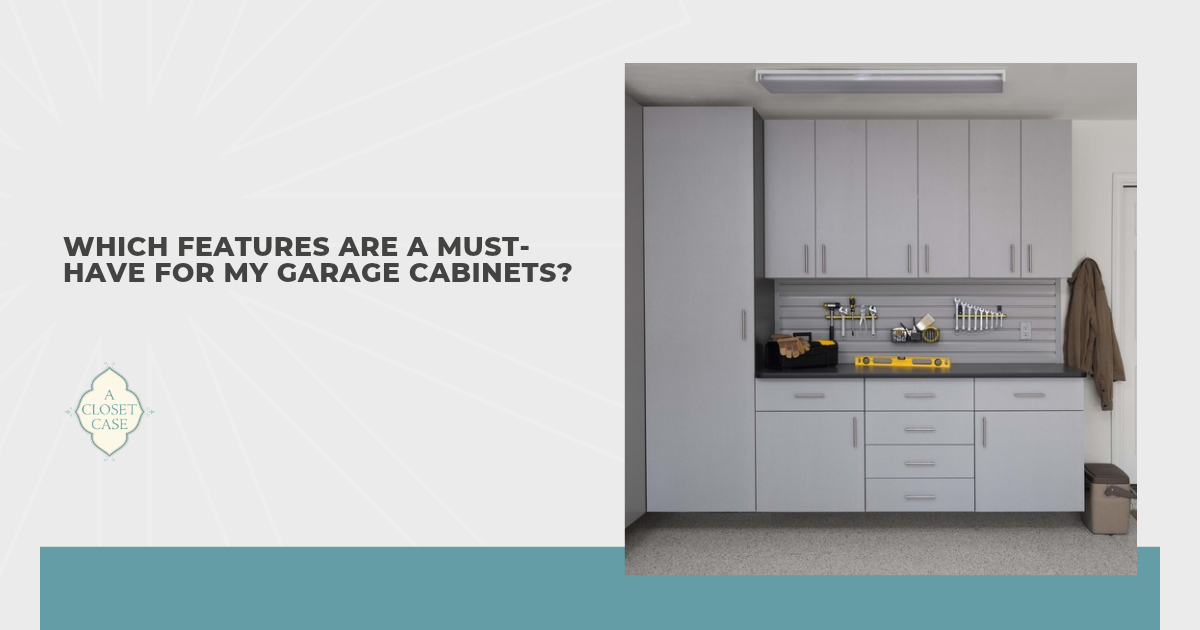
If you've started shopping for garage cabinets, you may be wondering which features you'll actually use, and it's a question I hear often. Deep drawers might appeal to you, but will they suit the tools and supplies you own? Locks could also be useful, depending on who has access to the space. Materials, shelf support, and mounting deserve attention too, even though they're less noticeable in a finished design.
I can give you more useful advice when I know what usually slows you down in the garage. Digging through a bin for a screwdriver points to a different need than struggling to fit a cooler on a fixed shelf. Parking matters as well, especially if cabinet doors would open beside your car. Details like these keep you from paying for something that sounds great on paper but never solves a problem in your garage.
When you're deciding what your garage cabinets should include, these are the features I recommend you look at first:
- Moisture-resistant materials and finishes
- Adjustable shelving
- Drawer strength and full-extension slides
- Locking doors and drawers
- Raised cabinets and secure mounting
- Cabinet depth and placement
- Sturdy work surfaces
- Optional upgrades
Let's go through these features and talk about which ones could make your garage easier to use.
Moisture-Resistant Materials and Finishes
Rainwater dripping from equipment or blowing in through an open garage door can put your cabinet materials to the test. Even occasional splashes are worth planning for when you're deciding where things will go. I ask about those conditions before I recommend a material, because a cabinet's appearance won't tell you how it handles moisture. The surface, the material underneath it, and the protection around its edges all matter.
For garage cabinets made with laminate-covered panels, the outer finish is only part of the picture. The core is the board beneath that finish, and different boards are made for different conditions. Some are intended for dry indoor spaces, while others are designed for higher humidity. Knowing which board you're being offered gives you a more useful answer than being told the cabinet has a laminate finish. It's why I name the board when I quote a cabinet.
Edges and openings deserve a closer look too, since moisture can reach the core through unprotected areas. Proper edge protection and sealing where needed keep water out of those weak spots. But moisture resistance doesn't mean you can leave wet gear inside or let water sit against the cabinet. Drying equipment before putting it away and wiping up splashes are still part of looking after your storage. If water regularly enters the garage, I flag that up front, since that problem needs attention alongside the cabinet plan.
Adjustable Shelving
A cooler, a toolbox, and a stack of small bins rarely need the same amount of shelf space. Fixed shelves can leave you with openings that are too short for one item and far too tall for another. Adjustable shelving lets you close those gaps and arrange the cabinet around your belongings. Moving a shelf up or down may be all it takes to fit something that would otherwise end up back on the floor.
Before settling on shelf spacing, I like to measure the items you actually plan to store. Part of that is leaving enough room to lift a bin out or get a comfortable grip on a tool case. An item technically fitting inside your garage cabinets doesn't help much if you have to tilt, tug, or empty the shelf to remove it. It happens more than you'd expect. Even a little clearance can separate storage you use easily from storage you avoid.
Shelf strength still matters, even when the height is adjustable. The shelf, its supports, and the cabinet all have to handle the weight you plan to put on them. I go by the manufacturer's weight limits, since a shelf can look sturdy and still sag under a heavy load. As your equipment changes, recheck those limits before you move something heavy onto a shelf that held lighter items.
Drawer Strength and Full-Extension Slides
Hand tools can get heavy long before they fill a drawer. A collection of sockets, wrenches, and drill bits calls for different support than a few pairs of gloves. Drawer capacity should account for those contents, along with how the drawer itself is built. Drawer depth plays a part too, since a long drawer loaded with heavy tools puts more strain on its slides. "Heavy-duty" on a brochure says less than a stated weight limit for the installed drawer system.
Full-extension slides solve a separate problem by letting you reach the back of a drawer. Partial-extension designs leave some of that space inside the cabinet when opened. If you've ever had to feel around behind a tray to find a small part, you'll understand why that extra access is worth having. Being able to see the contents also makes it easier to return tools to their proper spots. Ask whether every drawer gets full-extension slides, since a cabinet can mix the two.
When comparing garage cabinets, a smooth-moving empty drawer only tells you so much. I judge a drawer by whether it's rated for your tools and still glides with them inside. Full extension describes how far a drawer opens, while the load rating describes how much it can carry. Quotes that list only one of the two leave you guessing about the other.
Locking Doors and Drawers
Not everything in the garage needs to be equally easy for everyone to reach. Start with what you want to keep private or control access to. Maybe you share the garage with family members and want your project tools to stay in one place. One locking drawer in your garage cabinets can give those tools a home of their own without putting every storage section behind a key. Paint thinners, cleaners, and sharp blades should sit behind a door children can't open on their own.
Locking cabinets work best when the secured compartment fits everything you plan to keep there. A small locking drawer won't solve the problem if your larger tool cases still sit outside it. I'm upfront that a basic cabinet lock isn't a safe, since the type of lock and the cabinet's construction both affect the protection you get. For everyday use, one compartment big enough for those tools is usually plenty.
Nobody needs your key to find a tape measure or a rag when the items everyone borrows live somewhere open. Decide who gets a key before the cabinets go in. A lock you have to fumble with tends to get left unlocked, so try it with your hands full. Confirm how far each lock reaches, whether one drawer, one door, or a whole run, since quotes can treat those differently. A spare key kept inside the cabinet it opens is no help at all.
Raised Cabinets and Secure Mounting
Space beneath cabinets can make sweeping and cleaning the garage floor easier. It also separates the cabinet body from direct contact with a damp floor, although it won't protect against every water problem. Wall-mounted systems get that clearance by attaching to a wall that can carry the load. Floor-supported designs may use legs or a raised base, depending on how the cabinet is built.
Leveling feet can help a compatible floor-supported cabinet sit straight where the floor isn't perfectly level. Check the level again once the cabinet is loaded, since weight can change how a floor-supported unit sits. Leveling feet don't replace any wall anchoring the manufacturer requires. I pay particular attention to both, because keeping a cabinet level and securing it are different jobs. With wall-mounted garage cabinets, the installer has to match the mounting system to the wall structure and the expected load.
Cabinet, shelf, and mounting limits also need to work together. Specs often list one capacity for the whole cabinet and another for each shelf, so a single number doesn't cover everything. Heavier items belong on the shelves and sections rated to carry them. Shelf ratings mean little if the mounting can't hold the combined load. Raised storage pays off when it frees the floor and holds the load without a wobble.
Cabinet Depth and Placement
More cabinet depth can sound like an easy way to gain storage, until it starts taking space your car needs. The outside dimensions also don’t tell you exactly how much usable room is inside. I compare both measurements with the belongings being stored and the space available around the parked vehicle. A deep cabinet may suit bulky equipment, while smaller supplies can become difficult to find at the back.
Placement matters just as much as size when you’re planning garage cabinets. Hinged doors need room to swing, and drawers need enough clearance to extend. A cabinet may fit neatly against the wall but still be awkward to use beside a car door or along the path into the house. Seeing those movements on the plan can reveal a problem before installation.
Painter’s tape on the floor can help you picture how far a proposed cabinet will project into the garage. With the car parked normally, you can judge whether there’s comfortable room to pass and unload it. A shallower section near a tight parking area may be more useful than making every cabinet equally deep. The aim is to gain accessible storage while keeping the garage convenient to use.
Sturdy Work Surfaces
Some garages need a place for repairs, while others only need somewhere to set a tool case down. I won't include a work surface unless there's a task you can picture doing there often. How you use that surface should guide its size, material, and support. Small assembly projects have different demands from tasks involving repeated impacts or heavy equipment. Mention any plans for a vise or mounted tool before the top is picked.
Work surfaces nobody uses take up space that might serve you better as a tall cabinet or a clear parking area. If you do need one, the surface and the garage cabinets beneath it should be built for the work you'll do. Looks alone don't tell you what the whole setup can carry. Height makes a difference too, since a top that sits too low or too high gets uncomfortable fast.
Then there's daily cleanup. Adhesives, finishes, and other project materials may require surface protection or specific cleaning methods. The care instructions that come with the top will show you what it can take before the first project begins. Room to work comfortably, reach your tools, and clear the surface afterward is worth more than a top chosen for its looks.
Optional Upgrades
Once the main storage needs are covered, a few extras can make the cabinets easier to use. Their value depends on whether they solve something that keeps getting in your way.
- Soft-close hardware: Doors and drawers that close gently are worth a look if slamming bothers you. Soft-close is a convenience feature, so drawer capacity and hinge quality still need their own check.
- Interior and task lighting: Lighting helps when your body or the cabinet itself casts a shadow over the spot you're working in. Place it to fill those dark spots, and find out whether power and installation are part of the plan.
- Drawer dividers and removable trays: Small parts are easier to sort when they have separate compartments. Removable organizers give you some freedom to change the arrangement as your tools or supplies change.
- Specialized pull-outs: A pull-out can make one particular item easier to grab, but its hardware takes up room inside the cabinet. The convenience should be worth both the cost and the lost storage.
I consider an upgrade worthwhile when you can explain how it will help during a normal week. Plenty of garage cabinets give you a useful place for your tools without every available accessory.
Conclusion
Good garage cabinets should hold up to what you store and make your day a little easier. Drawers might be a priority because you have plenty of small tools, while a work surface would be useful for weekend repairs. There's no single combination that everyone needs. Moisture-resistant materials and properly rated shelves and drawers do belong in every garage. Before you pick a design, walk through a normal day the way I do, with the cabinets full and the car pulled in, including where everything goes back when you're finished.
Showroom Location
260-D Seven Farms Drive, Daniel Island, SC 29492
Contact Information
Phone: (843) 971-9069
Email: aclosetcase@gmail.com
Hours
Showroom & Office Hours
Monday - Friday: 9:00 AM - 5:00 PM
Saturday - Sunday: By Appointment Only