How to Add More Kitchen Pantry Storage Space Without Expanding the Room
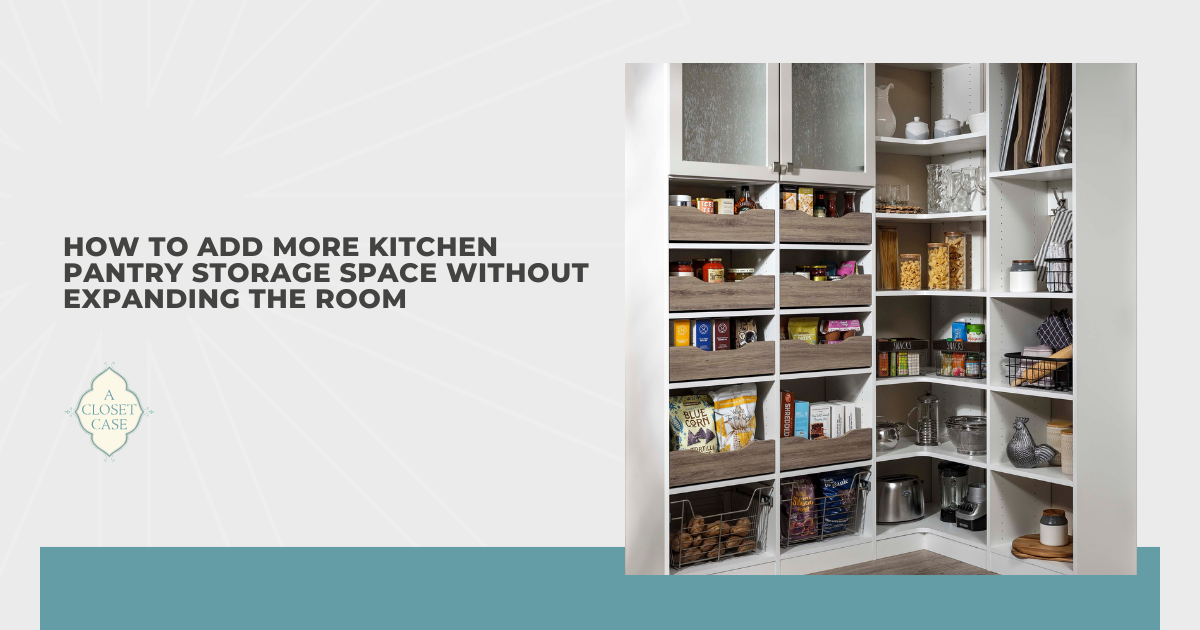
Pantries have a habit of filling up long before every inch of them is doing useful work. One shelf might devote a foot of height to six-inch cans, while another sends three rows of groceries so far toward the back that half of them are forgotten until they expire. Bags, bottles, appliances, snacks, and bulk purchases only make those inefficiencies more noticeable. Getting more from a kitchen pantry begins with making its existing footprint work harder rather than finding a way to make the room larger.
Storage capacity comes down to more than the number of shelves lining the walls. Height, depth, corner access, door space, and even the mix of package sizes can determine how much of the available area earns its keep. I often see crowded shelves with several inches left unused above cans, jars, and other shorter items. Recovering enough of those overlooked areas can add meaningful storage without burying food behind more food.
More storage can often come from a few targeted changes, and I recommend looking at how your kitchen pantry uses the space it already has before considering anything more extensive. Here are 10 options worth considering:
- Start by finding the space your pantry is already wasting
- Adjust shelf spacing to match what you actually store
- Use shelf depth more strategically
- Put corners to work instead of losing items in them
- Extend storage upward without making everything hard to reach
- Use the back of the pantry door for shallow storage
- Put narrow sections of open wall to work
- Give small items their own storage zones
- Move bulky and rarely used items out of prime pantry space
- Create storage zones based on how often you reach for things
You may be surprised by how much storage your pantry is already giving away. Let’s look at the places where those extra inches tend to hide.
Start by Finding the Space Your Pantry Is Already Wasting
It’s easy to assume a packed pantry has reached its limit, but sometimes the problem is simply where the available room is going. Canned goods might occupy only half the height between two shelves, oversized packages can leave unusable pockets around them, and an awkward corner may hold far less than its dimensions suggest. Even a bare strip of wall or the area above the highest shelf can represent storage that was never incorporated into the layout. Add up several missed opportunities throughout a kitchen pantry, and the room may have considerably more potential than the crowded shelves suggest.
Finding empty space is only part of the job because the reason it stays empty matters just as much. My eye goes first to places where the contents and the space around them clearly don’t match. A wide opening above a row of cans points to a different problem than groceries disappearing at the back of a deep shelf, while a crowded floor may indicate that bulky items are occupying space better suited to everyday food. Recognizing what causes each trouble spot makes it much easier to decide which areas are genuinely worth changing.
Once you know where the room is being lost, you can begin putting those inches back to work. Empty height may be recovered by changing shelf positions, bulky items can move to less convenient areas, and unused walls or corners can handle storage suited to their dimensions. Not every open inch needs to be filled, especially when doing so would make groceries harder to see or reach. The aim is to reclaim space that can genuinely hold more while keeping the pantry comfortable to use. Shelf spacing is a useful place to begin because poorly positioned shelves can waste room all the way from the floor to the top of the pantry.
Adjust Shelf Spacing to Match What You Actually Store
A quick scan of most pantry shelves reveals just how different the contents are in height. Cans and jars may stop several inches below the shelf above, while cereal boxes, bottles, and small appliances need much taller openings. Rather than giving every row identical clearance, use the tallest item you regularly keep in each group as a guide and leave enough room to lift it out comfortably. You may end up with several shelf heights instead of a perfectly even arrangement, but far less vertical space goes unused.
Of course, what comes home from the grocery store doesn't stay exactly the same year after year. Adjustable shelves allow a row to move up or down when buying habits change, a new appliance needs a home, or certain foods begin taking up more room. Even a shift of a few inches can make a difference in a kitchen pantry, particularly when several oversized gaps can be tightened enough to free room elsewhere. Being able to make those small corrections keeps the shelving useful without requiring the whole interior to be redesigned.
There is a point where squeezing in another shelf stops helping. I’d rather leave a little working room above groceries than watch someone wrestle a cereal box out of an opening made an inch too short just to gain another row. Hands need space to reach in, bins should slide out without catching, and taller purchases still need somewhere sensible to go. Aim for shelf heights that fit the foods and supplies you normally keep while leaving enough clearance to use them comfortably. Once the height feels right, it's worth looking at whether the shelves themselves reach farther back than you can conveniently use.
Use Shelf Depth More Strategically
Reaching past three rows of groceries for a jar against the back wall is a good sign that extra shelf depth isn't necessarily giving you extra usable storage. Food can disappear surprisingly quickly once products begin lining up behind one another, especially when the items in front are taller or wider. Soon, only the first part of the shelf gets used regularly while the back becomes a holding area for things you forget you have. More depth earns its place only when you can comfortably see and retrieve what occupies it.
Smaller products generally need less depth to stay organized and visible. Cans, jars, spices, and similar goods are easier to keep track of when they aren't buried several rows deep, while large appliances and bulk packages can make better use of deeper areas because they're harder to overlook. Pullouts can make an existing deep shelf more accessible by allowing its contents to come forward, and appropriately sized bins can do the same for packets, snacks, or other loose goods. Used selectively, both can help a kitchen pantry make better use of depth without turning every shelf into another layer of containers.
Having to unload half a shelf to retrieve one ingredient immediately tells me the space at the back isn't doing its job. Frequently reached-for foods belong where grabbing them doesn't require rearranging everything in front, while larger or occasional-use items can occupy less convenient areas. Where deep shelves can't be changed, grouping smaller products in pullouts or removable containers gives you a practical way to reach the back without sacrificing the space altogether. Getting the depth right means more of the shelf remains genuinely usable, especially as shelving approaches the corners where access can become even trickier.
Put Corners to Work Instead of Losing Items in Them
Few pantry frustrations compare with being able to see something in a corner but having to move half a shelf to get your hand around it. I check corners from the direction you’ll actually reach into them, because a shelf that looks spacious from the front can become surprisingly cramped where two runs meet. Extending both shelves all the way into that intersection may create more surface area on paper, yet one side can block the other and leave a deep pocket behind the groceries. Small jars, cans, and packets are especially easy to lose there because they can slip out of sight while remaining difficult to retrieve.
Leaving part of the intersection open can sometimes make the corner far more useful. Staggering where the shelves end, changing their shape, or shortening one run can provide enough room for your hand and the stored item to move in and out comfortably. Within a kitchen pantry, the best configuration depends on the corner dimensions, shelf depth, and what you intend to keep there rather than on covering every inch with shelving. Larger items that remain easy to spot, such as serving pieces or lightweight backup supplies, usually make better candidates for the deepest portion than small everyday foods.
Giving up a few inches of shelf coverage may sound counterproductive when the goal is to gain storage, but inaccessible space isn't much of a gain. A slightly more open corner can make the surrounding shelves easier to reach and reduce the need to unload one area just to get into another. Everyday groceries can stay toward the accessible edges, while less frequently handled items occupy the deeper section without getting in the way. Sometimes the smartest use of a pantry corner is leaving enough of it open so you can actually use everything around it.
Extend Storage Upward Without Making Everything Hard to Reach
Look above the highest shelf in a pantry and there may be a sizeable stretch of wall doing nothing at all. Extending the shelving higher can put that area to use without taking room away from groceries stored at more convenient heights. Extra paper goods, unopened backups, seasonal baking supplies, and lightweight serving pieces are good candidates because they don't need to come down every day. I won't use extra height just because it's available if reaching what goes there will become a hassle. More shelves only add useful capacity when the items stored on them can still be retrieved comfortably.
Weight becomes especially important as storage moves above normal reach. Heavy appliances, large bulk packages, and glass containers may fit perfectly on a high shelf but feel awkward or unsafe to lower, particularly from a step stool. Keeping heavier goods closer to waist or chest height makes them easier to handle, while lighter supplies can occupy the space overhead. A sturdy compact step stool can help with occasional access, but it shouldn't turn an inconvenient location into the default home for something you use every week.
The highest shelves in a kitchen pantry are better reserved for lightweight backups, seasonal supplies, and other items that only come down occasionally. Grouping them by use can help you find what you need without rummaging through several unrelated items while standing on a stool. Everyday foods can remain in the easier reach zones, leaving the upper wall to handle the overflow that would otherwise compete for those spots. Used selectively, that extra height gives the pantry more room without making the things you depend on regularly harder to get.
Use the Back of the Pantry Door for Shallow Storage
Pantry doors can offer several feet of vertical storage without occupying additional floor or shelf space. Shallow racks work particularly well for spice jars, seasoning packets, snack bars, wraps, and lightweight bottles because these smaller goods don't need the depth of a standard shelf. Many of them otherwise end up scattered among larger products, where they consume more room than their size warrants. Door-mounted storage gives them a dedicated home while freeing deeper shelving for bulkier foods and supplies.
Clearance can make or break the setup. Every rack and product on the door needs enough room to pass the shelves, frame, and handle without bumping into anything as the door swings shut. I always check the space behind a closed pantry door with the intended items in mind, since an empty rack can fit perfectly and become too deep once it's loaded. Weight needs consideration as well, particularly with bottles, jars, or several rows of packaged goods. Accurate measurements of the available depth, rack dimensions, and typical contents can save you from creating storage that interferes with the door itself.
Smaller products are where this extra surface can really earn its place in a kitchen pantry. Seasonings might occupy one portion of the rack, while snacks or other frequently reached-for packages fill another, making each group easy to scan without digging through a larger shelf. Clear roles also keep the door from turning into a catchall for anything that happens to fit. More importantly, moving appropriately sized goods onto the door opens up valuable shelf room for items that genuinely require greater depth.
Put Narrow Sections of Open Wall to Work
Standard pantry shelving can leave slim sections of wall untouched simply because a full-depth shelf won't fit there. Six or eight inches beside a doorway, at the end of a shelving run, or between existing components may seem too small to matter, yet the dimensions could suit a completely different type of storage. Narrow vertical racks might accommodate bottles or jars in a single row, while short runs of shallow shelving can handle compact foods without competing for room on the main shelves. Give me a narrow wall that standard shelving can't use, and I'll still check whether its dimensions match anything the pantry needs to hold.
Dimensions should drive the decision rather than the desire to cover every bare surface. Available width and depth need to suit a real group of items while leaving enough clearance to move through the room and reach nearby shelves comfortably. Custom-sized storage can make an awkward strip more useful because it follows the wall that actually exists instead of forcing a standard component into a poor fit. Space on the main shelves of a kitchen pantry can then go to larger packages, appliances, or supplies that genuinely require more depth.
Some narrow walls are worth leaving alone, and recognizing that limit is part of using the room efficiently. Storage that sticks too far into a walkway, blocks nearby shelving, or holds nothing particularly useful hasn't gained much for you. Several inches of open wall become valuable only when something you regularly keep fits there naturally and remains easy to retrieve. Those leftover inches earn their place when the wall dimensions and the items you need to store genuinely make sense together.
Give Small Items Their Own Storage Zones
Packets have a way of spreading into every available gap. Snack bars end up beside cereal boxes, seasoning envelopes slide underneath other groceries, and small baking supplies get pushed toward the back where they're easy to overlook. Individually, these products need very little room, yet scattered storage allows them to occupy far more shelf space than their size requires. I base containment on what needs corralling first, then choose a bin, divider, basket, or drawer that fits that particular group.
Snack packets and pouches often do well in open bins because you can gather several together and pull the whole group forward. Dividers can keep smaller baking supplies upright, while shallow drawers or pullouts may be useful for compact items that otherwise disappear behind larger packages. Oversized containers defeat much of the benefit, especially when half of their interior stays empty or their dimensions consume more shelf area than the products did originally. Good containment should compress scattered items into a smaller footprint without hiding what you have.
Small-item zones can be particularly useful in a kitchen pantry where several unrelated packages currently share the same shelf. One section might hold snacks, another baking packets, and another seasoning mixes, with each category occupying only the amount of room it actually needs. Clear groupings make it easier to spot duplicates before buying more and prevent loose products from gradually spreading back into open shelf space. Shelves gain room because small items stop claiming inches they don't really need.
Move Bulky and Rarely Used Items Out of Prime Pantry Space
Prime pantry space can disappear quickly when it becomes the default home for anything related to food or entertaining. Oversized serving pieces, duplicate appliances, seasonal supplies, and warehouse-size packages may spend weeks untouched while occupying shelves that could handle everyday groceries. One question guides me here: does the whole item need to live in the pantry, or does it simply need a sensible place somewhere in the home? Separating those two ideas can reveal a surprising amount of room.
Bulk purchases are a good example. Twenty-four individual packages don't necessarily need to occupy an easy-to-reach shelf when only a handful will be used before the pantry gets restocked. Part of the supply can remain accessible while unopened extras move to an upper shelf or another suitable storage area. Extra appliances and seasonal serving pieces deserve similar scrutiny when their size is out of proportion to how often they come out.
Space inside a kitchen pantry is especially valuable when it supports food and supplies used as part of the normal routine. Rarely handled items can stay in less convenient areas if there's enough room, while particularly bulky belongings may be better stored elsewhere. Relocating even two or three large pieces can sometimes free an uninterrupted section of shelving instead of a collection of small gaps. More capacity, in this case, comes from deciding what earns pantry space rather than finding a way to pack everything into it.
Create Storage Zones Based on How Often You Reach for Things
Daily use provides a simple way to decide which groceries get the easiest positions. Breakfast foods, snacks, cooking staples, and other frequently handled items can occupy the shelves that are most comfortable to reach without bending, stretching, or moving something else first. Weekly ingredients can sit slightly outside that prime area, while backups and occasional supplies can use higher, lower, or deeper locations. Such an arrangement reserves the most convenient storage for the products moving through the pantry most often.
Your actual routine is more useful here than a generic pantry diagram. Coffee might deserve prime placement in one household, while lunch-packing supplies or baking ingredients could claim the same area in another. I pay attention to what repeatedly travels from shelf to counter, because those trips reveal which items benefit most from easy access. Categories can still stay together, but frequency helps determine where those categories belong.
Zones don't have to remain fixed when routines change. School schedules, holidays, different shopping habits, or a new cooking routine can alter which products come out most often. Shifting a frequently used category closer is usually easier when shelves and storage components haven't been packed so tightly that nothing can move. Flexibility keeps the kitchen pantry arranged around current habits rather than an organization plan created months or years ago.
More storage won't feel especially useful if the things you reach for every day are still buried behind everything else. Easy-reach shelves should handle the busiest part of the pantry, while less convenient areas absorb the products that can afford to be farther away. Each zone then carries a different share of the workload instead of every shelf competing to hold a little of everything. Extra capacity becomes easier to maintain because access remains part of the organization rather than an afterthought.
Conclusion
More pantry storage doesn't necessarily require moving a wall or increasing the room's footprint. Shelf spacing, depth, corners, upper areas, doors, narrow walls, and overlooked gaps can all contribute additional capacity when they're used according to what actually fits there. Contents deserve just as much attention, since scattered small goods, oversized packages, and rarely used items can consume valuable room even in a generously sized kitchen pantry. My priority is to make more of the existing space genuinely usable rather than simply finding another place to squeeze something in. More room becomes meaningful when groceries remain visible, reachable, and easy to put back after you use them.
Showroom Location
260-D Seven Farms Drive, Daniel Island, SC 29492
Contact Information
Phone: (843) 971-9069
Email: aclosetcase@gmail.com
Hours
Showroom & Office Hours
Monday - Friday: 9:00 AM - 5:00 PM
Saturday - Sunday: By Appointment Only