How Do I Fix Poor Lighting in My Walk-In Closet?
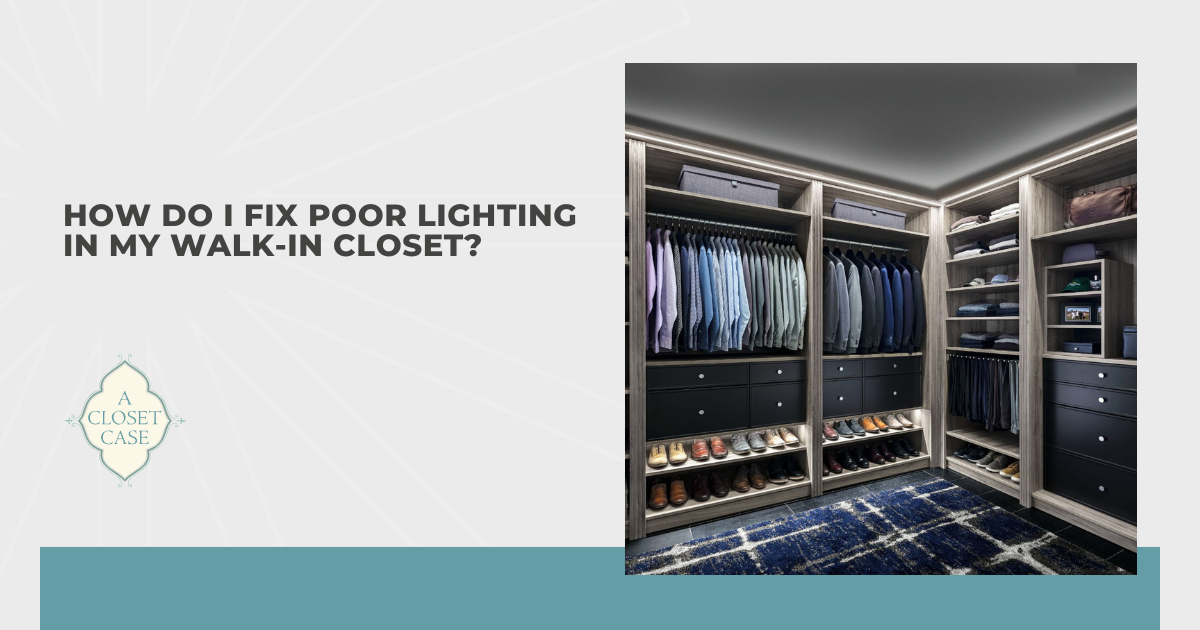
Poor lighting is one of the most common frustrations I see in a walk-in closet. Even when the space is large, it often feels dark or unevenly lit in the exact areas where light matters most, like hanging rods, shelves, and corners. In most cases, the problem isn’t the size of the closet but the lighting setup, and with a few smart changes, poor walk-in closet lighting is usually easy to fix.
Here are practical ways to fix poor lighting in a walk-in closet, focusing on fixture choice, placement, and simple upgrades that make a noticeable difference:
- Replace a single dim ceiling light
- Add lighting where clothes and shelving block light
- Use more than one light source
- Improve light placement and direction
- Illuminate dark corners and vertical sections
- Choose light fixtures with the right brightness
- Work with the closet’s finishes, not against them
- Add motion-activated or automatic lighting
Let’s look at the most effective lighting fixes for a walk-in closet, starting with the one that usually makes the biggest difference.
Replace a Single Dim Ceiling Light
Many walk-in closets rely on a single ceiling fixture that simply isn’t bright enough to light the entire space. These fixtures are often small, outdated, or chosen without considering how shelving and hanging clothes block light. As a result, the center of the closet may be lit, while corners and storage areas stay dark. This makes everyday tasks like choosing outfits or organizing shelves more difficult than they should be.
The most effective fix is to replace that fixture with a brighter LED ceiling light that distributes light evenly across the closet. Flush-mount or low-profile LED fixtures designed for closets provide higher light output without taking up extra space. I see the biggest improvement when homeowners choose fixtures with wide light spread rather than narrow, directional beams. This single upgrade often changes how the entire closet feels.
Upgrading the main ceiling light creates a strong lighting foundation for the space. Once the overall brightness improves, it becomes easier to identify whether additional lighting is needed in specific areas. In many cases, this one change alone solves most lighting problems.
Add Lighting Where Clothes and Shelving Block Light
Overhead lighting doesn’t always reach the places where you actually need to see inside a walk-in closet. Clothing, shelves, and built-ins naturally block light, creating dark pockets even when the ceiling fixture is bright. These shadowed areas are usually around hanging rods, upper shelves, and the back of deeper sections. That’s often where visibility matters most.
Instead of trying to brighten the entire closet, it helps to light these zones directly. Low-profile LED strip lights or linear fixtures placed above hanging rods or beneath shelves bring light into areas that overhead fixtures miss. This type of lighting fills in shadows without changing the overall look of the closet. It also makes colors and details easier to see at eye level.
Once these shadowed areas are lit, the closet feels more balanced and usable. Items are easier to find, and the space feels intentionally designed rather than unevenly lit. This change works especially well in closets with built-in shelving or multiple hanging levels.
Use More Than One Light Source
A walk-in closet is rarely a single, open space. It’s divided into zones, including hanging areas, shelving, drawers, and corners, all of which interact with light in different ways. When everything depends on one fixture, certain sections are always going to be overlooked.
Using multiple light sources allows lighting to follow how the closet is actually used. A ceiling fixture can provide general illumination, while additional lighting supports specific areas where visibility matters most. Spreading light across the space reduces harsh contrasts and avoids the common issue of bright centers and dark edges.
From a professional point of view, I believe layered lighting makes the biggest difference in closets with multiple storage zones. Each section becomes easier to see and use without relying on one light to do all the work. The space feels more balanced and intentionally designed rather than unevenly lit.
Improve Light Placement and Direction
In a walk-in closet, most people aren’t looking at the floor. They’re scanning shelves, reading labels, checking colors, and comparing clothing at eye level. When light is positioned without that in mind, the space can still feel dim even if it’s technically bright enough. What’s missing is light where your eyes naturally focus.
Shifting light so it washes across walls, shelving, and hanging areas changes how the closet feels immediately. Light that runs parallel to storage, instead of straight down, reveals depth and detail that overhead fixtures often miss. This is why linear lighting along shelves or walls tends to feel brighter than a single strong ceiling light.
Once light is directed toward the areas you actually interact with, the closet becomes easier to use without adding more fixtures. Colors read more accurately, shadows soften, and the space feels more intentional. Direction, not just brightness, is what makes the difference here.
Illuminate Dark Corners and Vertical Sections
I’ve noticed that the areas people struggle with most in a walk-in closet are often the ones they don’t consciously register. Corners, tall storage sections, and narrow vertical spaces tend to sit outside a person’s natural line of sight. When those areas aren’t clearly visible, they’re treated as secondary storage, even if they’re used daily. Poor lighting quietly reinforces that behavior.
Bringing those areas into visual focus changes how the entire closet is used. Light placed along vertical edges or within tall sections helps the eye move naturally through the space instead of stopping at what’s immediately visible. These subtle lighting additions don’t need to be bright to be effective. They simply need to make those zones feel present.
Once vertical and corner areas are visually accounted for, the closet feels more cohesive. Storage stops feeling scattered or forgotten. The space reads as intentional and complete, rather than partially lit with dead zones.
Choose Light Fixtures With the Right Brightness
Poor lighting in a walk-in closet isn’t always about where the light is placed. Sometimes the space feels wrong simply because the light itself doesn’t match how the closet is used. Dim lighting can make colors look muted, while overly harsh lighting can feel uncomfortable and uninviting. Both make everyday decisions harder than they need to be.
Brightness and color temperature play a bigger role here than most people realize. Lighting that’s too warm can distort clothing colors, while lighting that’s too cool can feel stark and clinical. In my experience, closets work best with bright, neutral light that makes fabrics, patterns, and details easy to see without straining your eyes.
When the light feels comfortable and accurate, the closet becomes easier to use almost instantly. Choosing outfits takes less effort, and the space feels more functional without changing anything else. This adjustment often improves the experience more than adding another fixture.
Work With the Closet’s Finishes, Not Against Them
A walk-in closet is perceived visually before lighting is consciously noticed. When shelving, walls, and storage elements share darker or similar tones, everything blends together. That lack of visual separation makes the closet feel heavier and harder to read, even when lighting levels are adequate. What feels like a lighting issue is often a contrast issue.
Introducing lighter finishes creates clearer visual boundaries. Light-toned shelving, brighter backing panels, or subtle changes in surface sheen help distinguish one area from another. These distinctions allow the eye to move more easily through the closet, making items stand out without increasing brightness.
With stronger visual definition, lighting works more efficiently on its own. Clothing, shelves, and accessories become easier to recognize at a glance. Overall, the closet reads as cleaner and more intentional without adding new fixtures.
Add Motion-Activated or Automatic Lighting
Walk-in closets are often used during moments of transition. Getting dressed in the morning, changing after work, or grabbing something quickly all happen in short bursts. Lighting that requires an extra step can feel out of sync with how the closet is actually used. The delay, even if minor, breaks the flow.
Automatic lighting aligns illumination with those moments. Lights activate as the closet is entered, so visibility is immediate rather than something you have to initiate. This timing matters more than brightness in many cases, especially in windowless closets or early and late hours. The lighting feels responsive instead of reactive.
When light responds instantly, the closet feels more intuitive to use. Movement and visibility stay connected, and nothing feels interrupted. That seamlessness is often what separates a closet that works from one that just exists.
Conclusion
Poor lighting in a walk-in closet is rarely caused by one big mistake. It’s usually a series of small decisions that don’t fully support how the closet is used day to day. Addressing lighting piece by piece, from fixtures and placement to finishes and automation, allows the closet to function the way it should. With a few thoughtful changes, a walk-in closet can feel clearer, more usable, and far less frustrating to spend time in.
Showroom Location
260-D Seven Farms Drive, Daniel Island, SC 29492
Contact Information
Phone: (843) 971-9069
Email: aclosetcase@gmail.com
Hours
Showroom & Office Hours
Monday - Friday: 9:00 AM - 5:00 PM
Saturday - Sunday: By Appointment Only